


 United States Haydn, Mahler: Cleveland Orchestra / Petr Popelka (conductor). Mandel Live performance Corridor at Severance Music Middle, Cleveland, 30.10.2026. (MSJ)
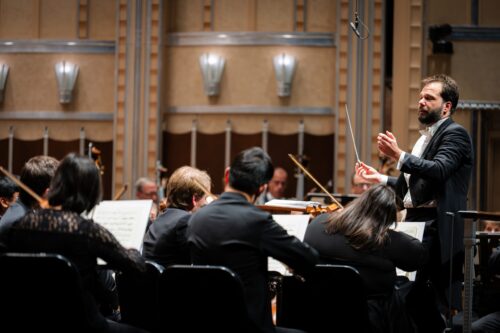
Haydn – Symphony No.80 in D minor
Mahler – Symphony No.5 in C-sharp minor
Hypothesis about who’s to turn out to be Franz Welser-Möst’s successor in Cleveland has been heating up. Czech conductor Petr Popelka made it clear in interviews with native media earlier than his two weekends of live shows with the Cleveland Orchestra that he regards these performances as a job interview. So, how did he do? Nobody-word reply will suffice.
Having heard Popelka as a visitor 3 times, it’s apparent that he totally is aware of the scores he conducts. He has robust ideas and largely delivers on them in efficiency. He’s a grasp of the dramatic pause, and conducts quiet, intimate music with depth. The issue that retains returning in Popelka’s performances might be described as an extra of excellent style. Merely put, he restrains all the things marked above forte and appears unwilling to chop the music unfastened. Make no mistake, his Mahler Fifth was good apart from that fixed governing of the brass and percussion. However any efficiency of this work which makes Christoph von Dohnányi and Franz Welser-Möst’s Cleveland performances look freewheeling by comparability is simply too restrained.
Extreme politeness was additionally a difficulty within the first work of the live performance, Haydn’s Symphony No.80. One may argue that Mahler No.5 is a sufficiently big work and doesn’t want a program mate, however one can’t complain about an opportunity to listen to one of many less-familiar Haydn symphonies. No.80 matches with the Mahler inasmuch because it begins within the minor and ends within the main, however its world could be very totally different, not least within the a lot smaller orchestration. It might be one of many works influenced by Haydn’s theatrical work within the 1770s and 1780s for all the first motion is a well-sprung setup gag: the opening music is extremely dramatic though Popelka arguably understated it. After a tense pause, the composer fully undercuts the obvious seriousness with a flippant shut of the exposition part. Popelka by no means rushed the pauses, giving the work its full comedian timing in order that it nonetheless labored delightfully. The Adagio motion was elegantly unfolded, although the next Menuetto was arguably somewhat ponderous. The Finale: Presto additionally felt a contact restrained for a composer who beloved to tease each viewers and gamers. All-in-all, it was a strong efficiency of uncommon repertory that will have been higher if the conductor weren’t all the time erring on the aspect of warning.
After intermission, the efficiency of the Mahler received off to an imperfect begin with a wayward opening fanfare, however it’s a notoriously bare begin. These items occur. What’s extra vital is that this blip didn’t stop the orchestra from strongly establishing the symphony’s expressive world. Rhythms have been subtly sprung in order that the music’s tread was solemn however not heavy. Popelka confirmed perception when the second look of the lyrical subsidiary theme was extra pressing than the primary time. However the first disappointment got here with the sudden acceleration marking the start of the event which wasn’t all that explosive on this efficiency. In his renditions (and in his Decca recording), Dohnányi demonstrated that the passage might be managed in tempo however nonetheless burn. Popelka appeared extra involved with not hitting the passage too onerous that early within the work. Whereas long-term planning is nice, the issue that emerged was one among Popelka restraining issues over and over at nearly each climax. Is that this his absolute view of the work, or was he making an attempt too onerous to attraction to the vaunted Cleveland Orchestra poise? One hopes that the orchestra won’t ever lose that inside coherency, however it’s not a one-trick pony. They will blow the roof off when applicable, and if it isn’t applicable in Mahler, when is it? Mahler is the guy who, when confronted with Niagara Falls, reportedly exclaimed, ‘Ultimately, a real fortissimo!’ If he writes for a passage to be loud, take him at his phrase.
It grew to become much more of a difficulty within the second motion, the half that made the good German conductor Wilhelm Furtwängler swear off ever conducting Mahler’s Fifth as a result of he couldn’t face the music’s ‘nihilistic’ ending. Whereas it might not be true nihilism, the motion undoubtedly tears aside its personal makes an attempt to rise as much as brightness … or, not less than, it ought to. Popelka, sadly, restrained any try by the brass or percussion to indicate energy, inhibiting what must be a hair-raising expertise. Proper in the midst of it, nonetheless, was a glowing passage carried out to perfection: the gradual recitative passage for the cellos. The efficiency out of the blue snapped to emotional consideration because the conductor inspired the low strings to dig right into a wealthy, burnished sound after a breathtakingly quiet begin. In that sort of music, Popelka strikes gold.
The third motion was higher, as Popelka inspired the gamers to spring rhythms, turning what could be a leaden ländler in some palms right into a careening waltz for giants. Alternately playful, sleek and anxious, the motion unfolded with a advantageous steadiness of spaciousness and ahead drive. Nathaniel Silberschlag performed his solos standing on the head of the horn part, not like in 2019 when Franz Welser-Möst had him come downstage to face by the rostrum. The place made little distinction for Silberschlag crammed the corridor radiantly. His solos and the pizzicato string interludes have been redolent with emotion, though the closing of the motion was, once more, saved on too tight a leash. Woodwind principals Joshua Smith (flute), Frank Rosenwein (oboe), Afendi Yusuf (clarinet) and John Clouser (bassoon) supplied gleaming however characterful solos as properly.
The spotlight of the live performance got here within the well-known Adagietto the place Popelka thrived on the music’s intimacy and inspired the Cleveland strings and harp to play like their lives trusted it. It was magnetic, beautiful and emotionally compelling, proving that Popelka could make superb issues occur in the proper music. The next Rondo finale (performed with out pause, not like the break between the primary two actions) began at a great tempo and gained momentum from there, with Popelka lastly letting the orchestra unfastened within the closing pages which have been negotiated with nimble aptitude. The viewers response was extremely enthusiastic.
As job interviews go, it was truthful, though not a clincher. Popelka will observe with Brahms’s German Requiem subsequent week whereas fellow contender Santtu-Matias Rouvali involves city quickly with Richard Strauss’s Heldenleben. Native media thinks it’s all the way down to a battle between these two.
We’ll see.
Mark Sebastian Jordan

