


Photograph: Matthew Staver
Opera Colorado, opened its 2026–27 season. the primary season absolutely deliberate by Common Director and CEO Barbara Lynne Jamison, with Verdi’s tackle the Scottish play. It will need to have been thought of a protected guess for Halloween season: the visitors snarl outdoors the Ellie Caulkins Opera Home in Denver added to the opera-goers’ sense of impending doom, for ‘twas a darkish (if not stormy) night time outdoors, and the slithy toves did gyre and gimble within the wabe.
Wait, that was simply the (non)regie, although. My program says that Opera Colorado set this Macbeth in 11th-century Scotland, however when you had instructed me it was set in 16th century Sicily or 22nd century Uzbekistan, I’d have taken your phrase for it. The director, Dan Wallace Miller, making his Opera Colorado debut, has supposedly framed the manufacturing round how whispers turn into prophecy, and the way a rumor, as soon as believed, can flip into energy. One might nearly hear the blue-rinsed donors reaching for his or her checkbooks, safely assuming there gained’t be any extraterrestrials, Mars expeditions, or unexplained laundromats on stage.
Because the opera opens, we’re on the blasted heath—ON IT!, to cite Anna Russell. However tender! Why are there teams of witches now, mendacity down for a little bit of a shuteye, all dressed of their Hogwarts colours? There’s a gaggle of white witches (not essentially the benign type), there’s a gaggle of purple witches, and there’s a gaggle of black-clad witches, and so they’re all made out of ticky-tacky and so they all look simply the identical. Very Dragula, darlings.
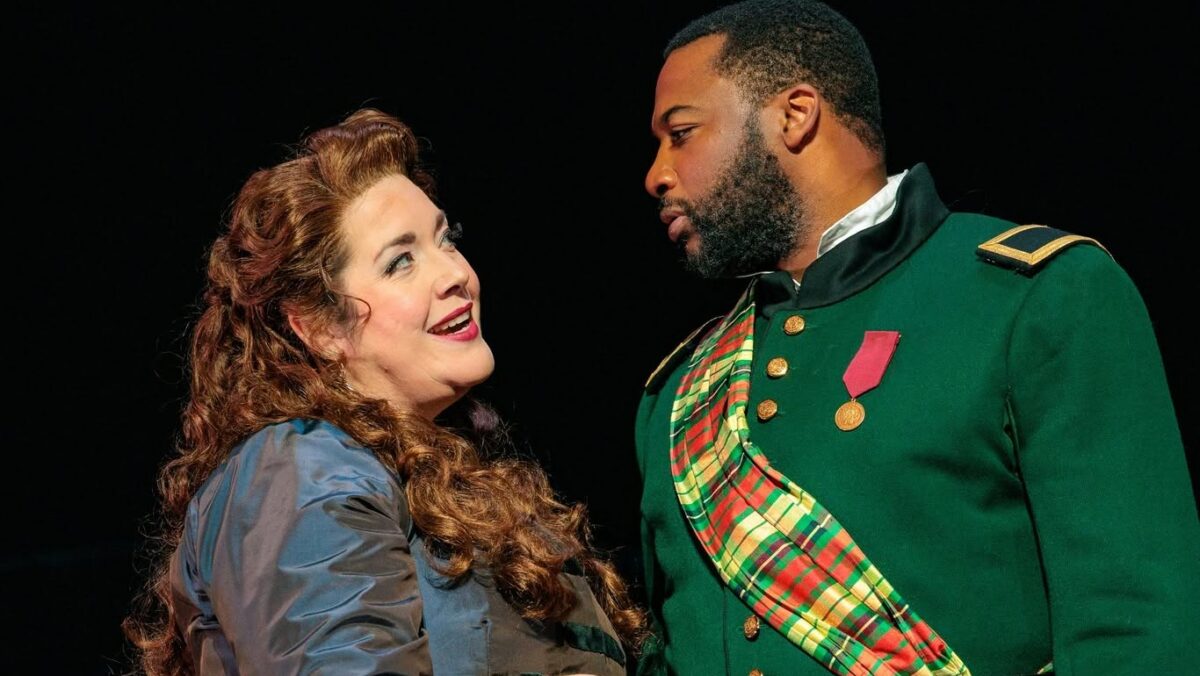
I can keep on on this vein for 5 extra pages, however I’ll summarize by saying that this was a really generalized manufacturing with nothing extra “novel” than the zombie-witch hybrids trying barely self-conscious and misplaced. The boys wore bottle-green uniforms with tartan sashes. The ladies wore somber colours accessorized with—you guessed it—tartan sashes, besides the poor Thane of Fife’s quickly to be erstwhile spouse, who was dressed like Olympia in a small German firm’s manufacturing of Hoffmann’s Erzahlungen. Why? I dunno. There was a really cozy trying blue leather-based chair inexplicably positioned in the course of the stage, and the characters sat down, took a load off their toes, and sang concerning the night sinking quick, or the shortage of pity, love and respect, or their poor nation being ravaged by a tyrant. Sounds acquainted?
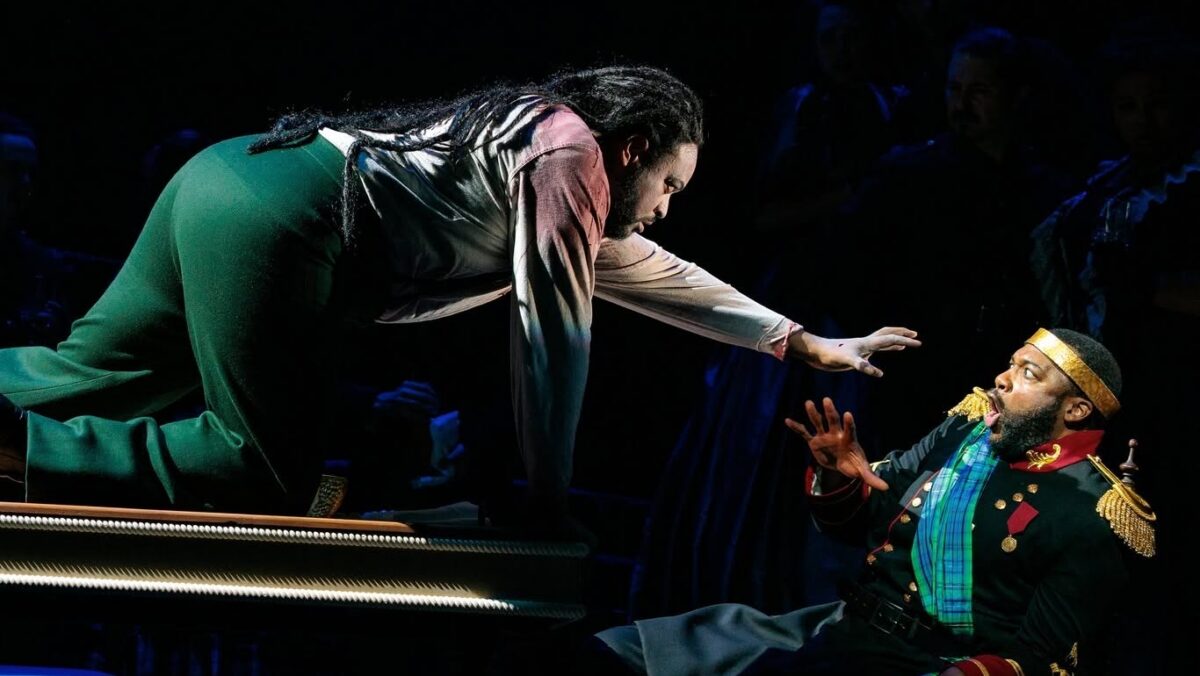
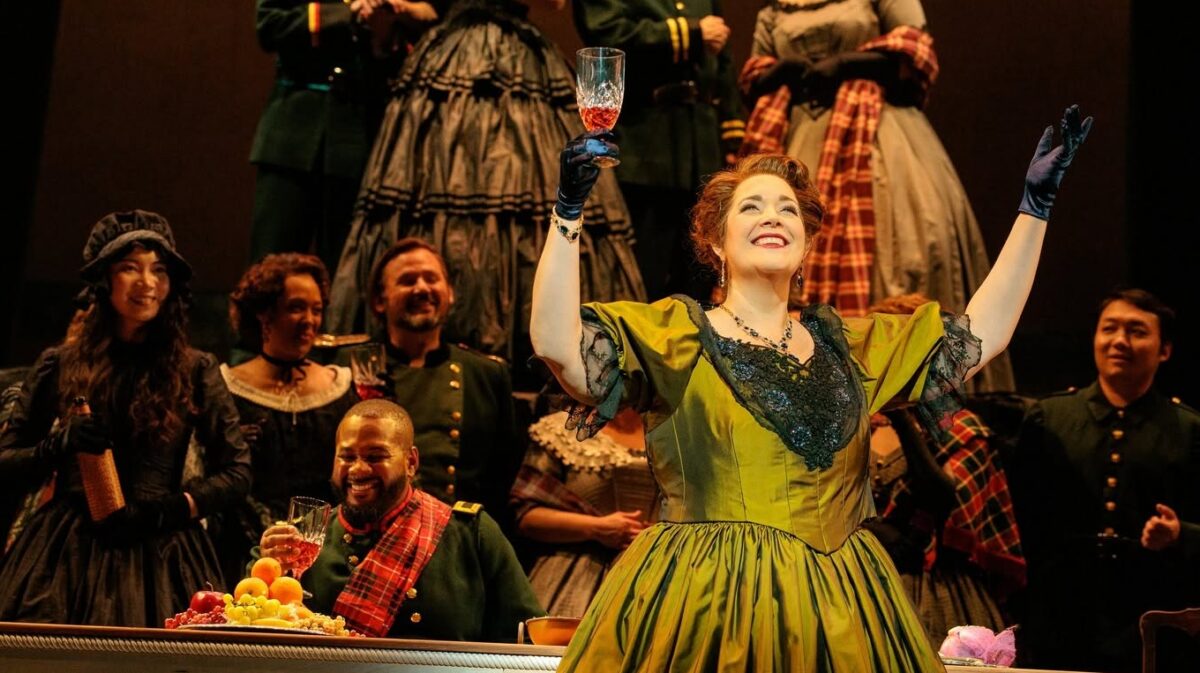
What else can I say concerning the stagecraft? The descending desk within the brindisi scene was enjoyable. A spectral Banquo did a number of excessive jumps on and off the desk, because the crossfitters within the viewers nodded approvingly. Macbeth appeared barely disoriented. Girl M. appeared to fret extra concerning the coloratura than her hubby’s sudden descent into insanity: I used to be reminded of Rysanek, Zampieri and Borkh’s frantic, nearly frenzied efforts to show every part was okay, or Astrid Varnay and Shirley Verrett’s magisterial, fatalistic singing, making an attempt to make use of sheer willpower to cowl up the cracks in Macbeth’s regal façade. Our Girl M. appeared to have little or no chemistry along with her hubby. This made her sporadic makes an attempt to make out along with her Lord and Grasp kinda cringe, particularly in that one scene the place they went down sizzling and heavy on the bottom, like a Shakespearean Bonnie and Clyde. In the event that they have been angling for a sexually voracious, younger Girl M a la Francesca Annis within the Roman Polanski film, it wasn’t—let’s assume—a direct recreation?
Earlier than I transfer on to the massive scenes, let me put down a number of random impressions: the three specters within the prophecy scene have been properly performed; Banquo’s farewell to his son was touching as he exited, pursued by a bear(y murderer); Macduff sang a touching farewell to all his fairly chickens and their dam, extinguished at one fell swoop; the pitiful little coffins proven on stage. I want they might have stored the lid on for Girl Macduff-in-her-Olympia-getup, nevertheless. The ultimate struggle would have been extra spectacular if the troopers weren’t waving what seemed like plastic X-mas bushes in turning into shades of yellow, ochre, orange, and different vibrant fall colors, resulting in the query: had Birnam wooden immigrated to Vermont lately? Macbeth’s henchmen, on the brink of kill Banquo, appeared to do a model of the leg-o’-mutton rag onstage, with the music faintly paying homage to Gilbert and Sullivan. Given how the ladies have been on stage for more often than not, one wonders if their sisters, cousins and aunts would have adopted them to the assassination web site with cat-like tread. Patrick Summers, Music Director Emeritus of Houston Grand Opera was a stable if unremarkable conductor in his Opera Colorado debut, and stored issues chugging alongside properly with no self-indulgent tempi.
Photograph: Matthew Staver
Lastly, the singing. I hope I’m giving my neutral observations right here, as a result of I wasn’t accustomed to the singers’ earlier works. Our ill-fated and credulous Thane of Cawdor/Glamis/and so on. was sung by Norman Garrett, who got here to the half having already sung it with Opera Orlando; this run marked his firm debut. His assumption of the function stays a piece in progress, however I did discover his “pieta, rispetto, amore” fairly well-sung, and his preliminary camaraderie with Banquo made his later betrayal of his buddy and comrade much more jarring and heinous. Banquo, sung by a heart-melting good-looking Kenneth Kellogg, initially placed on a superb present, however was positively displaying indicators of hoarseness towards the top of the night. On condition that Banquo isn’t a protracted and laborious slog, I’ll attribute it to the climate, or nerves. Neither males have been idiomatically Verdian; it’s Edward Graves as Macduff who deserves that accolade.
The web opinions have been praising Marcy Stonikas, the Girl Macbeth, to the excessive heavens for her artistry. She appears to have made a specialty of the battle-axe roles in regional homes: Turandot, Elektra, and so on. – a modern-day Gladys Kutcha or Lucilla Udovich. Clad in a sequence of funereal outfits, she sang the letter scene with lots of voice, crumpling the letter and chucking it out (that’s proof, girl—burn it or summat!) as a grand gesture. Her subsequent bout of bloodthirstiness was much less plausible. Made up in a wig that seemed prefer it was salvaged from the Renée Fleming “Thaiiis,” she appeared to egg Macbeth on to commit bloody homicide in essentially the most humdrum of how. Nor did she make a lot of an impression throughout the Grand Duet—one among my favorite items of Verdiana – the place she didn’t convey Martha Modl’s hushed whisper of pure terror, Callas’ impatient ball-breaking, or Christa Ludwig’s “Mutti is aware of finest” omniscience. Her “cross me the dagger” – a line that has been sung up to now by different artists with irritation, willpower, tremulousness, and even relish, was sung as an announcement of truth: “cross me the espresso, and look sharp about it.” In truth, regardless that Zinka Milanov had by no means sung Girl Macbeth (so far as I do know), and I’m means too younger to have seen her on stage, Stonikas’ performing jogged my memory of up to date accounts of Zinka’s Aida and Leonora: one hand up, mildly agitated; each arms up, there’s some severe malarkey afoot. I additionally don’t have an in depth evaluation of her sleep-walking scene, besides to say that the fitting notes have been sung in a business-like method (I gained’t swear to the D-flat). Regardless of the physician and the serving-woman’s interjections of “oh what horrors”, I don’t suppose anybody within the viewers discovered the scene spooky, horrifying and even upsetting.
Photograph: Matthew Staver
The opposite singers have been enough with out being overwhelming: Banquo’s “Come dal ciel precipita” was well-received; Macduff’s “Ah, la paterna mano” bought the show-stopper remedy, and fairly justifiably so. Malcolm, the Girl-in-Ready, the Physician, and the Apparitions, a few of these roles being sung by Opera Colorado’s resident artists, have been completely respectable. The refugees’ refrain, “Patria oppressa,” appeared well timed; total refrain steadiness and diction left a constructive impression.
After I had reviewed Opera Colorado’s Madama Butterfly a number of months in the past, I had talked about that regardless of a standard staging, the singers made the opera come alive. Aside from the Macduff, and possibly Girl M. from a purely vocal standpoint, I can’t recycle that verdict for this “Macbeth”. It stays a piece in progress in each sense. The idea (if there was one) didn’t come by means of on stage, the menace of the supernatural wasn’t creepy sufficient, and the quasi-traditional interval setting felt drained and unoriginal. Happily, the fast-paced motion, coupled with a few of Verdi’s most enjoyable music, nonetheless makes this eminently watchable, and it will be fascinating to see how the careers of Stonikas, Garrett, and Graves develop over time.

