


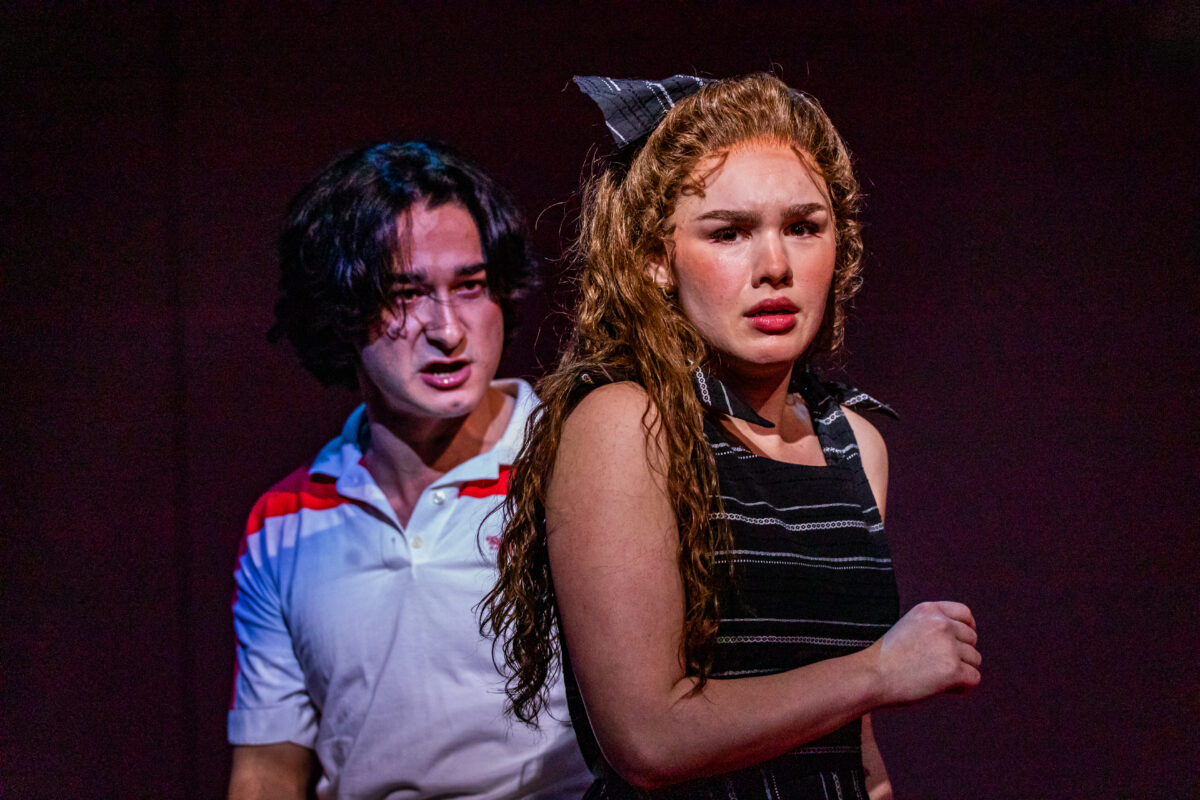
Phptp: Large Eyed Studios, courtesy of Curtis Institute of Music
Don’t underestimate Carlisle Floyd’s Susannah!
Thoughts you, that’s not an unusual drawback. The agricultural Tennessee setting and colloquial lyrics; the unapologetically easy storytelling; the characters, who put on their hopes and fears on their sleeves. After which, there’s the musical model—already considerably retro by 1955 when the opera was written—which options real showcase arias, alongside pretty conversational passages and interludes of an unmistakably American sound. Sure, even the irresistibly melodic nature of the rating causes some listeners to condescend.
However don’t. The fundamental thought—a retelling of the biblical story of Susanna and the elders that was apparently steered to Floyd by a graduate scholar—is impressed. The composer in the end wrote the libretto, and I’ll give this concession to those that criticize the work: Floyd’s generally stiffly literal textual content will not be the equal of his rating.
However what a fascinating rating it’s, with all 4 principal characters totally and individually etched by way of music. In significantly the prolonged sequences—particularly for Susannah herself, and her nemesis, the evangelist “meetin’ preacher,” Olin Blitch—are compelling, even thrilling.
Thrilling—however not simple. Susannah is with out query an opera, and its vocal calls for are… properly, operatic. It’s made tougher as a result of the character of the characters—nation of us all—concurrently requires a way of rustic naivete.
That is nowhere extra evident than in probably the most continuously excerpted solos: “Ain’t it a reasonably night time?” and “The timber on the mountain.” Each gloriously melodic arias for Susannah, they want arching vocal lyricism and excellent pitch that by some means additionally suggests girlish innocence. (On the Met in 1999, Renee Fleming in peak type supplied luxurious vocalism certainly, however her on-brand persona of gracious placidity couldn’t have been farther from the character.)
And the calls for don’t cease there. A lot of lyric sopranos have very efficiently managed the arias. You may even think about a “folks soprano” like Joan Baez or Judy Collins successfully placing them over in a live performance context. However a lot of the narrative passages—particularly the final scene—name for actual thrust and amplitude. (Two famous interpreters—creator Phyllis Curtin, and Maralin Niska—additionally sang Tosca and Salome.) And Blitch wants a bass or bass-baritone of appreciable energy, to not point out a dedicated actor.
For these causes and extra, it’s particularly ironic that Susannah is basically now the province of music conservatories.
So it was right here in Philadelphia, although the Curtis Institute of Music is of a stage past just about each different conservatory within the nation. Specifically, their imaginative and prescient to appreciate the total theatrical worth of opera in addition to the musical, typically yields one thing particular.
For probably the most half, it did simply that in Susannah. Director Mikhaela Mahony and choreographer Zoe Scofield supplied an austere, elegantly spare manufacturing, set throughout the white clapboard partitions of what could be a gathering home or church. Furnishings have been spare, and the staging leaned into tableaux that usually evoked the Melancholy-era images of Dorothea Lange and Walker Evans, although some scattered folding garden chairs blurred the interval a bit. (Susannah, composed within the time of McCarthyism, is formally set in “The latest previous.”)
Design work (surroundings by Brendan Gonzalez Boston, lighting by Abigail Hoke-Brady, costumes by Amanda Gladu, and hair and make-up by Brittany Rappise) was first-rate, the equal of any I’ve seen in productions of this opera, and in addition extra imaginative and visionary than most. I used to be particularly taken with a present curtain that steered an Amish star flower quilt, however rendered in stark black-and-white—lovely, but invoking a moderately sinister sense of “certainty”)
A lot of the manufacturing’s energy needed to do with the sense of the ensemble as just about omnipresent observers—at all times watching, at all times judging. Efficient as this was in some ways, the pictorial nature of the visuals generally rendered the drama too inert. Susannah is a really “bodily” story—typically in a harsh and violent manner—and extra interplay would have sharpened this side.
Musically, this Susannah, vividly supported by members of the Curtis Symphony Orchestra performed by Mariana Corichi Gómez, additionally achieved at a really excessive stage. Harun Ellis Tekin performed Little Bat, with unusual sympathy. The character is difficult, to say the least: each Susannah’s suitor and her betrayer. Tekin additionally sang with a meltingly interesting lyric tenor. One other tremendous tenor, Jack Hicks, equally made Sam Polk, Susannah’s well-intentioned by feckless and drunken brother, a completely realized character, and sang the Jaybird tune with an actual sense of the people idiom (so necessary right here).
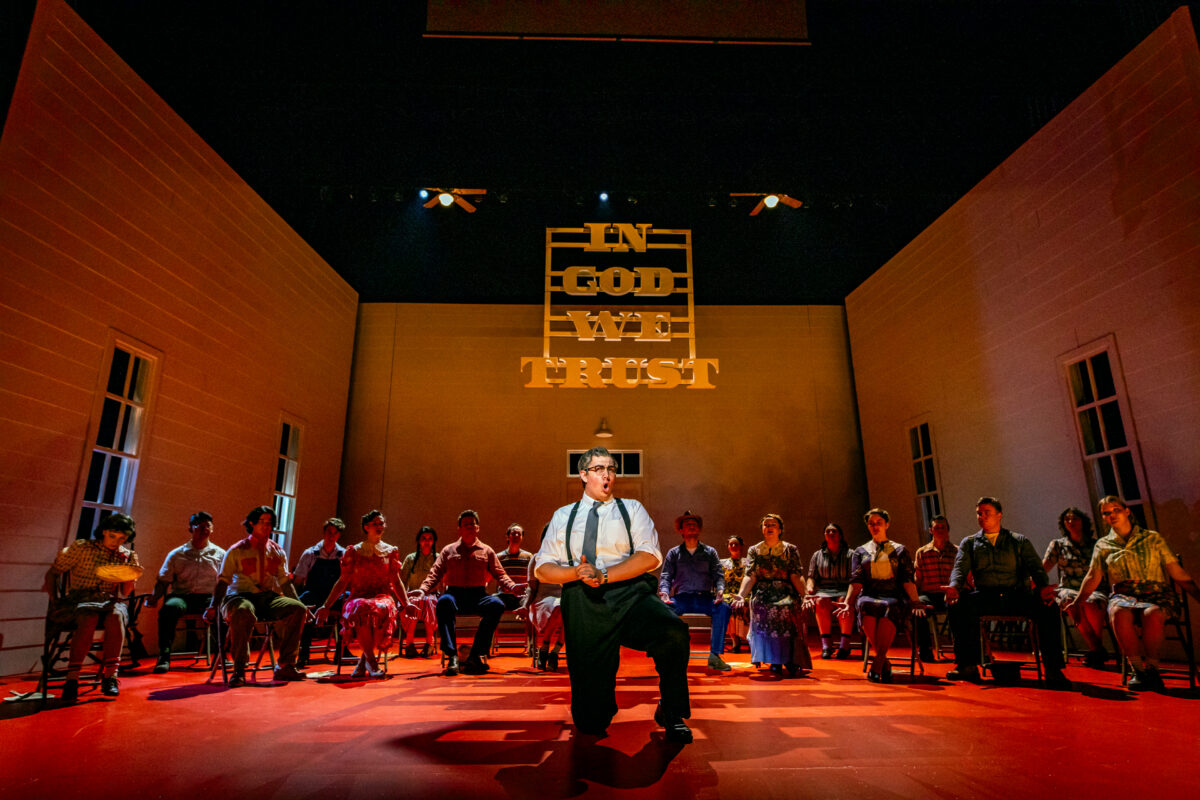
Photograph: Large Eyed Studios, courtesy of Curtis Institute of Music
Olin Blitch is a significant problem each dramatically and vocally. Theo Harrah’s refulgent, pretty tone—to my ear extra baritonal than many basses—was a pleasure in itself, and his interpretation of the character, extra regretful and self-abasing than some I’ve seen, added a welcome complexity to his scenes.
Many of the different characters perform largely as an ensemble, although within the showy cameo of Mrs. McLean, the city’s resident finger-wagger, Carlisle Quinn scored factors together with her formidable presence and her very distinctive, low-lying mezzo.
After all, there’s Susannah herself. Soprano Jennifer Robinson scored an actual success right here, discovering each the character’s early innocence and the harder aspect that units in later. Vocally she may recommend the sweetness of Susannah’s earlier, extra harmless self, however significantly in her higher register, she has an influence and gleam that basically fills the theater—the viewers pleasure was typically palpable.
Nonetheless to return at Curtis: Haydn’s Orlando Paladino, and Debussy’s Pelléas et Melisande. I’m excited for each!

