


 United Kingdom Varied: Clare Hammond (piano). The Venue, Leeds Conservatoire, Leeds, 26.11.2026. (PC)
Hélène de Montgeroult – Études Nos. 37, 67, 107, 110 and 111
Grażyna Bacewicz – Sonatina
Chopin – Barcarolle
Emma-Ruth Richards – 3 Études
Earl Wild – 7 Virtuoso Études after Gershwin: Nos. 7, 4 and 6
Rachmaninov – Études-Tableaux, Op.33
Stravinsky (arr. Guido Agosti) – The Firebird Suite: Danse infernale du roi Kastcheï, Berceuse, Finale
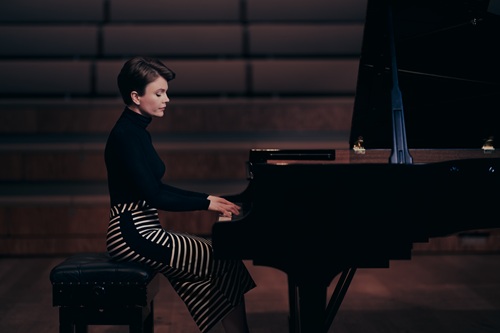
Forming a part of the Leeds Worldwide Piano Collection, Clare Hammond’s recital given in The Venue at Leeds Conservatoire on 26 November ranged broadly, presenting music from varied international locations by composers of the Classical and Romantic eras, in addition to Twentieth-century and up to date items. The programme included various examples of ‘Études’, or research, through which the poetical and expressive points of the music got due prominence, transcending merely technical concerns.
The programme started with a collection of 5 Études by the French composer and pianist Hélène de Montgeroult (1764-1836). This repertoire was an ideal match for Clare Hammond’s high-quality steadiness between pianistic bravura and interpretative sensitivity. No.37 had a young, flowing class and No.67 ranged over the keyboard in music of liquid fluency. No.107 was fiercely impassioned, contrasting successfully with the coolly elegant, delicately ornamented No.110. The extraordinary and impetuous No.111 introduced this spectacular sequence to a dramatic conclusion.
Courting from 1955, Grażyna Bacewicz’s Sonatina had a daring assurance that belied the diminutive of the title. A spirited, playful and crisply rhythmic opening Allegro non troppo was adopted by an uneasy sluggish motion, which unfolded like a haunted lullaby. The impetuous, dance-like finale was rounded off by a delightfully insouciant closing gesture.
Chopin’s Barcarolle, Op.60 was accomplished in 1846 and varieties certainly one of his final main works. In a deeply thought of account, the rating’s free-flowing, rhapsodic components got full scope, with out obscuring the narrative’s delicate integration of ternary construction and sonata kind. Ahead-looking points, equivalent to chromatic shifts and wealthy, generally dissonant, harmonies, contributed, along with the music’s liltingly expressive content material, in direction of a studying of nice depth and attain. With elegantly formed phrasing and limpid strains, this heartfelt efficiency was additional elevated by the pianist’s aptitude for participating story-telling and an innate feeling for color and timbre.
It was shrewd programming to observe this late Chopin work with the 3 Études by Emma-Ruth Richards, written on this decade. The final two of those subtle, eloquent items have been composed for Clare Hammond, who premiered them earlier this 12 months. Impressed by photos of birds in flight, the three research evoked, respectively, the growth and contraction of flocks of starlings, the alternating wingbeats and silent gliding of finches and the nocturnal journeys of swifts rising from the depth and hovering on the wing. This versatile music was vividly and inventively pictorial, but when approached as pure music impartial of its avian associations, the protean materials appeared like a pure improvement of the filigree ornamentation, harmonic sophistication and formal complexity encountered within the earlier Chopin work. Hanging a perfect steadiness between picturesque musical portray and formidable technical management, this was a finely honed, instinctive efficiency of music of putting up with value.
To shut the live performance’s first half, three of Earl Wild’s 7 Virtuoso Études after Gershwin (1976) discovered the pianist in relaxed, light-hearted spirit. ‘Embraceable You’ had a communicative immediacy, its expansive remedy complementing the sharp and vigorous ‘Fascinatin’ Rhythm’ and ‘I Obtained Rhythm’ that framed it.
After the interval, Rachmaninov’s Études-Tableaux of 1911 supplied additional alternatives for the pianist to take advantage of her expertise for characterisation. The buoyancy of the opening Allegro non troppo contrasted nicely with the shimmering textures of the next eloquent Allegro, whereas the opening of No.3 (Grave) had a hypnotic high quality, suggesting appreciable reserves of energy held in verify. Different items ranged from wistfully introspective (Nos.5 and eight) to a moto perpetuo-like dynamism (No.6) and the fanfare-like vitality of the Allegro con fuoco (No.7) was vibrant and celebratory in tone. The ultimate Grave introduced the sequence to a powerful, sensible conclusion. In each piece, thoughtfully chosen tempos have been sufficiently elastic to accommodate a recent, improvisatory remedy.
There adopted three actions from Stravinsky’s The Firebird Suite, transcribed for the keyboard in 1928 by Guido Agosti. In Danse infernal, Clare Hammond strained her technical talents to the restrict to seize the music’s frenzied spirit. A much less dedicated artist may need held again, guaranteeing the efficiency remained polished in addition to thrilling, however this pianist is invariably at pains to understand the composer’s intentions above any concerns of sheer great thing about sound. The end result was as genuinely thrilling, and unnerving, because the music and the story demanded. A mesmeric studying of the folk-like Berceuse was sufficiently measured to resonate profoundly, whereas the jubilant Finale contained dignity and hope, in addition to climactic bravura.
Desdémona from Mel Bonis’s Femmes de légende (1898) by Mel Bonis made a fluent and gracefully pensive encore. It was nicely acquired by the healthy-sized viewers, who responded keenly and appreciatively all through the night’s music-making. Putting virtuosity fully on the service of characterisation and interpretative perception, this distinctive recital was graced by refinement, readability, and breadth of creativeness.
Paul Conway

