


Watch the episode
Watch My Two Cents with Taliat Tarsinov — Method and Artwork on Instagram
Created and offered by Taliat Tarsinov. Observe Taliat on Instagram at @taliattarsinov and go to his Fred Astaire Dance Studios Worldwide Dance Council profile.
Key takeaways
- A transparent weight change tells your companion one thing helpful. They will really feel once you’ve arrived and once you’re able to go once more.
- The beat provides you timing. Listening to what occurs over the beat provides you decisions about how a well-known step feels.
- Your companion can let you know one thing a mirror can’t. Ask what they felt once you danced the identical step a second method.
How do I make my motion clearer?
What does ballroom dance approach appear like in a single step?
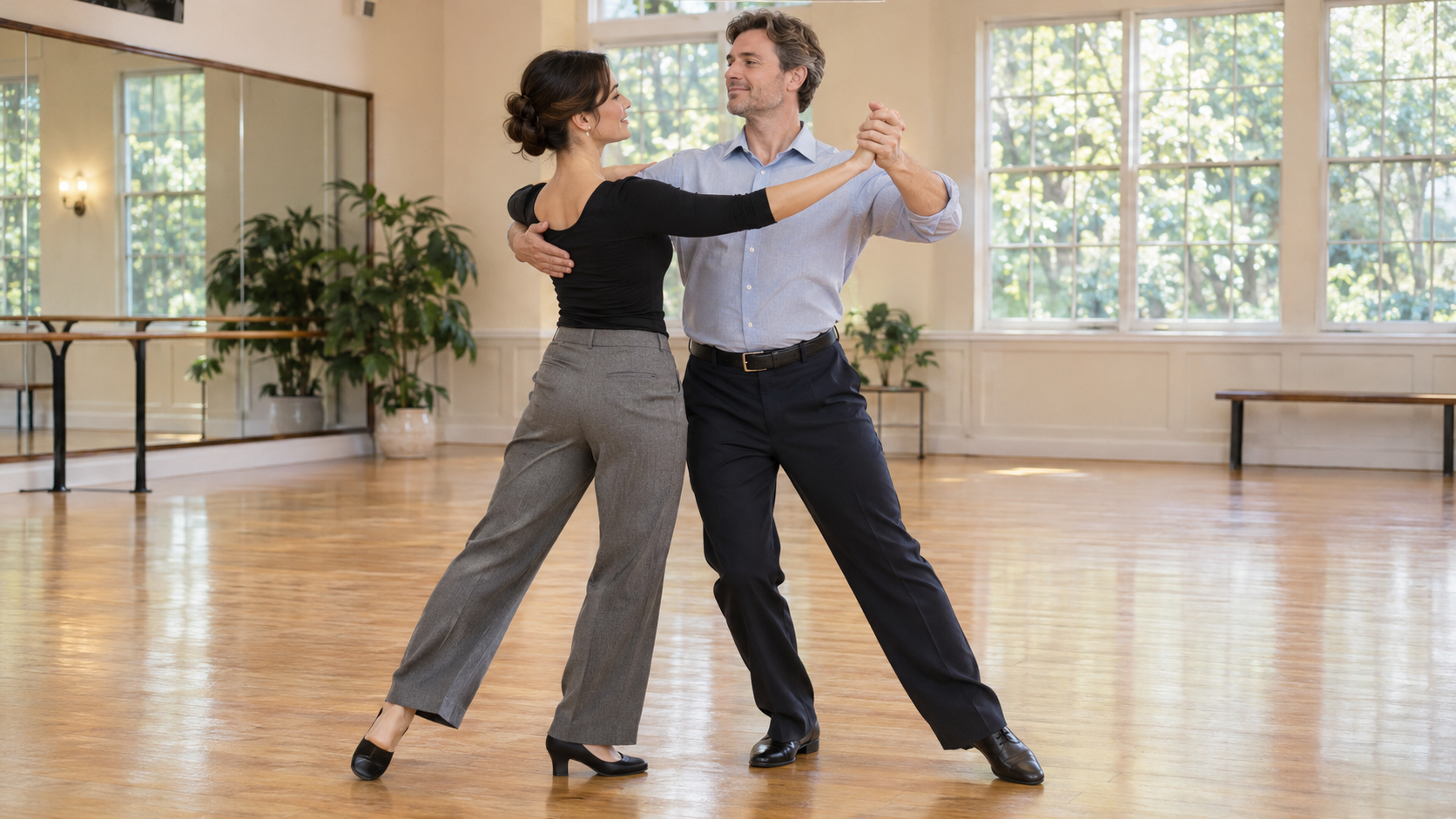
Take the primary half of a waltz field. One companion steps ahead, to the aspect, and closes their toes. The opposite steps again, to the aspect, and closes. From throughout the room, you may say each folks acquired it proper as a result of their toes went to the appropriate locations.
Now think about being the individual taking that first backward step. In a single model, your companion sends a foot ahead, leaves most of their weight behind, and provides you slightly push with their fingers. You are taking a guess at how far to go. In one other model, you are feeling your companion’s physique start to journey with the step. The course is sensible, and the 2 of you arrive collectively. From throughout the room, the containers may look a lot the identical. From contained in the partnership, they’re two completely different dances.
That’s a very good motive to care a couple of element as small as ending a weight change. It provides the individual holding your hand a clearer invitation. And as soon as they’ll really feel the place you’re going, you may spend rather less of the music steering.
Why can I do know the steps and nonetheless really feel stiff?
Attempt saying your own home tackle aloud. Simple sufficient. Now say it whereas paying shut consideration to what your lips, tongue, and jaw do on each syllable. Even your personal avenue title can begin to sound peculiar. One thing comparable can occur when you realize a dance sample however hold checking each transferring half.
In your subsequent cross, give your self one job. In case your teacher helps you with steadiness, discover which foot carries your weight when your toes shut. Let that be sufficient for one field. Then lookup and provides your consideration again to your companion. Did the subsequent step really feel simpler to begin? That reply is extra helpful than a listing of every little thing your elbows might need achieved.
What am I making an attempt to say?
What’s musicality in ballroom dancing?
Musicality is how a dancer responds to what they hear in a chunk of music. Take a recording you realize properly. You possibly can most likely faucet a gentle beat by the refrain. You may additionally know precisely the place the singer holds a phrase slightly longer or the piano solutions with three vivid notes. These particulars are invites. Two folks can agree fully on the depend and fall in love with completely different moments within the music.
Even on the competitors ground, that distinction issues. The World DanceSport Federation describes each preserving time and deciphering the construction of the music when it explains how dancers are evaluated. For a social dancer, there’s an easier technique to discover the concept. On the primary hear, faucet the beat. On the second, hum the half you keep in mind. Your toes and your voice simply picked out two issues you possibly can dance to.
How can I make a fundamental step really feel expressive?
Think about that the individual throughout from you is somebody you’ve simply met. You hear the primary three beats of a waltz and supply a quiet howdy. How a lot house do you’re taking? How regularly do you start? The place does your consideration go when your companion accepts the invitation?
Now image a pal stepping off a prepare after a yr away. Dance the identical three beats as a welcome. Perhaps your eyes come up sooner. Perhaps you journey slightly farther collectively. Or possibly the reunion makes you linger. The fascinating half is discovering out which selection feels trustworthy to you and cozy to the individual dancing with you.
Taliat places it this fashion:
“Method provides a dancer the instruments to talk, however artwork provides which means to what they are saying.”
— Taliat Tarsinov
There’s room in that thought for a brand-new dancer. You already know what it feels wish to greet a stranger or welcome somebody residence. A lesson provides you a couple of extra methods to let one other individual in on the sensation.
Why can a dance from one other technology nonetheless transfer us?
Considered one of Taliat’s observations is that dancers inherit approach. A technology takes what earlier dancers found, research it, and finds methods to develop it. Artwork retains a special form of time. As he factors out within the episode, one thing made yesterday or a thousand years in the past can nonetheless imply one thing to the one that encounters it immediately.
For a glimpse of what dancers have handed alongside, open the Library of Congress assortment of greater than 200 social dance manuals. Amongst them is The Ball-Room Information, which incorporates directions for the waltz. Take into consideration the one that as soon as opened a e-book like that earlier than going dancing. You might need a video saved in your telephone for a lot the identical motive. Every of you desires to recollect what to do when somebody holds out a hand.
The subsequent time an outdated dance clip catches your eye, watch it twice. First, comply with the toes. See should you acknowledge a step. On the second viewing, watch the moment earlier than the couple begins transferring. Maybe one dancer waits, the opposite appears up, and so they set off collectively. Ask your self which half made you need to replay it. It could be a little bit of footwork you’d like to be taught. It could be that look.
Taliat closes with three photographs. A painter picks up a brush. A musician takes up a violin. A dancer invitations a companion. That third picture holds a beautiful chance for anybody studying ballroom. The individual you invite will get to reply.
Attempt the identical step twice
Right here’s a follow train we propose at Fred Astaire Dance Studios for exploring the concept in Taliat’s episode. Choose a brief piece of music and a sample each companions already know. A waltz field works fantastically. So does a rumba fundamental. If both of you wants instructions midway by, select one thing easier. You’ll need sufficient consideration left over to hear to one another.
- Dance it as soon as for readability. Give yourselves a couple of measures to settle into the beat. Discover one element, corresponding to whether or not you each end transferring your weight earlier than the subsequent step. On the finish, every individual names one second that felt simple. Be particular. “I may really feel after we had been able to go once more” tells you greater than “That was good.”
- Replay the identical music with an intention. One companion quietly picks a phrase. Attempt playful, tender, or curious. Maintain the essential sample and the shared beat. See what your phrase adjustments about the best way you start a motion or let it end. Maintain the change sufficiently small that your companion has room to reply.
- Ask what got here by. Earlier than revealing the phrase, ask, “What felt completely different that point?” Your companion may say, “I felt such as you had been teasing me slightly.” They may say, “I had extra time to complete my flip.” Each solutions let you know one thing. Commerce roles and let the opposite individual select the phrase for the subsequent spherical.
There’s no prize for guessing tender on the primary strive. One of the best discovery may come when your companion describes one thing you had no concept you had been doing. Take that element to your subsequent lesson. “We favored how the second field felt. Are you able to assist us determine what modified?” provides your teacher a beautiful place to start.
Questions dancers ask about approach and expression
How do I cease counting each step with out dropping the beat?
Let the depend come and go. Rely aloud for 2 containers, then hear for one acquainted sound in the course of the third. You may select the bass on the primary beat of every measure. Choose the depend again up everytime you want it. Over a couple of repeats, you might discover there’s one passage the place the music carries you comfortably and one other the place counting nonetheless helps. Now you realize precisely which passage to deliver to your teacher.
Can rookies work on expression from their first lesson?
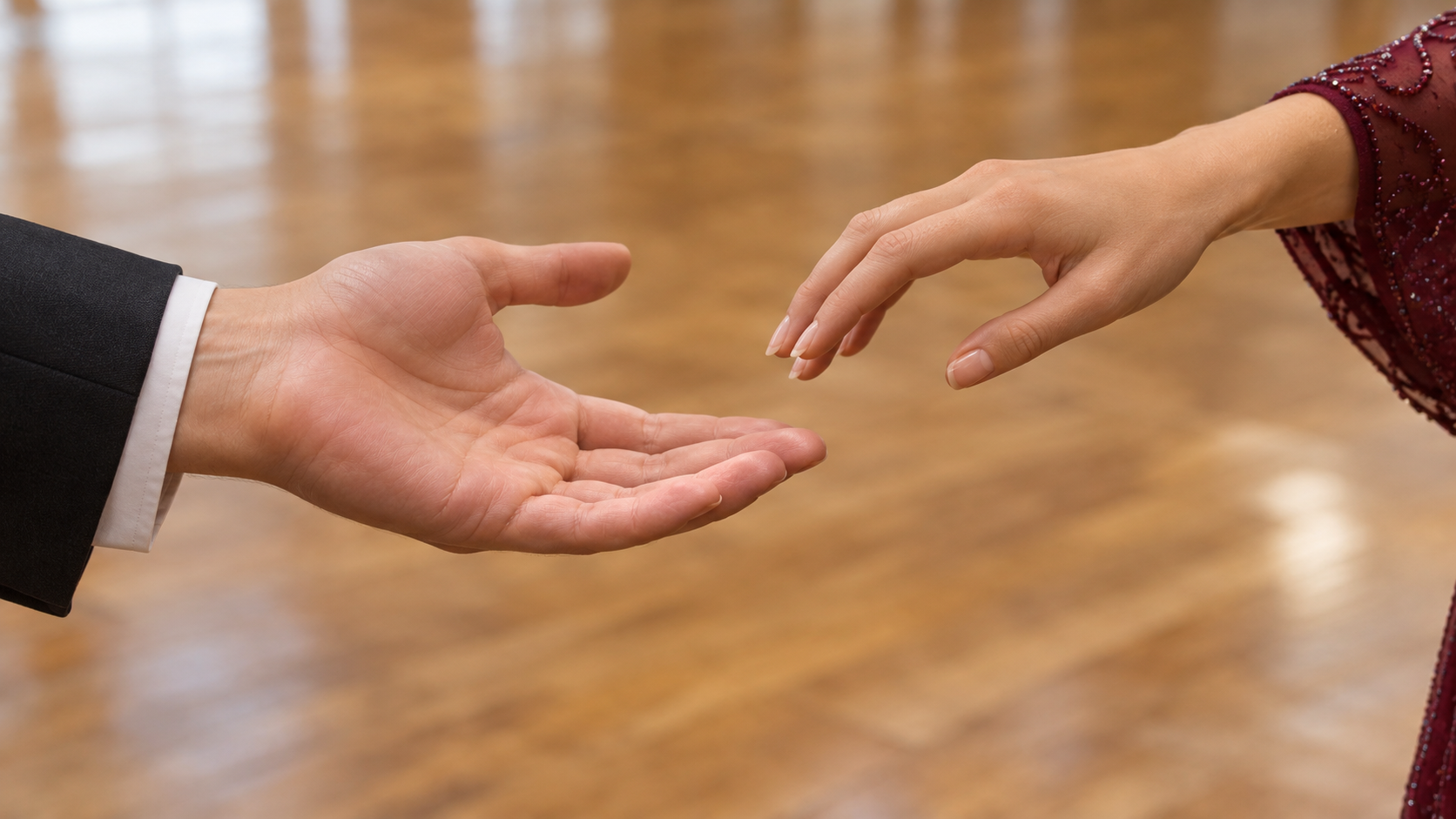
Sure. Even earlier than you realize an entire sample, you may determine the way you need to invite somebody to maneuver. Attempt providing your hand as should you’re saying, “Lets?” Give your companion a second to take it. You’ve already practiced intention, timing, and a spotlight to a different individual. These decisions belong in a primary lesson simply as naturally as studying which foot goes first.
What’s the distinction between timing and musical phrasing?
Timing helps you place a step on its beat. Phrasing helps you hear the place a musical concept begins, builds, and involves relaxation. Consider singing “Pleased Birthday.” You possibly can faucet a good pulse by the entire music, but you realize precisely which phrase you’d stretch when everybody will get to the birthday individual’s title. Dancers can acknowledge a second like that collectively whereas preserving monitor of the beat beneath.
How do I present emotion with out feeling theatrical?
Begin with a sense sufficiently small that you simply’d acknowledge it in extraordinary life. Amusement is an efficient one. Recall the second a pal catches your eye throughout a room since you each heard the identical joke. See what remembering that does to your gaze as you dance. You possibly can go away your face alone and easily give your companion your consideration. Ask afterward what they seen.
How do dance companions talk what they hear within the music?
They will share a course, a change within the measurement of a step, or the best way they settle on the finish of a phrase. Attempt listening to some measures collectively earlier than you dance. Every of you names one sound you want. If you take maintain, you’ve a small piece of shared data. When that piano accent comes round, your companion is aware of why you’re smiling.
Can companions interpret the identical music in another way and nonetheless dance properly collectively?
Sure. One individual could hear a crisp rhythm whereas the opposite follows a clean vocal line. You possibly can share the course and timing of a determine whereas giving these particulars completely different shades. If a selection catches your companion abruptly, speak about that particular second and play it once more. Half the pleasure of dancing with another person is getting to listen to a favourite music by one other pair of ears.
Carry one music to your first lesson
Choose a music you’d acknowledge from the subsequent room. Discover the second you at all times flip up. Carry it to your teacher and say, “Proper there. That’s the half I need to dance to.” You’ve answered Taliat’s creative query earlier than you’ve even taken maintain. We may also help you discover the how, one step at a time.
Discover your native studio and e-book an introductory lesson

