


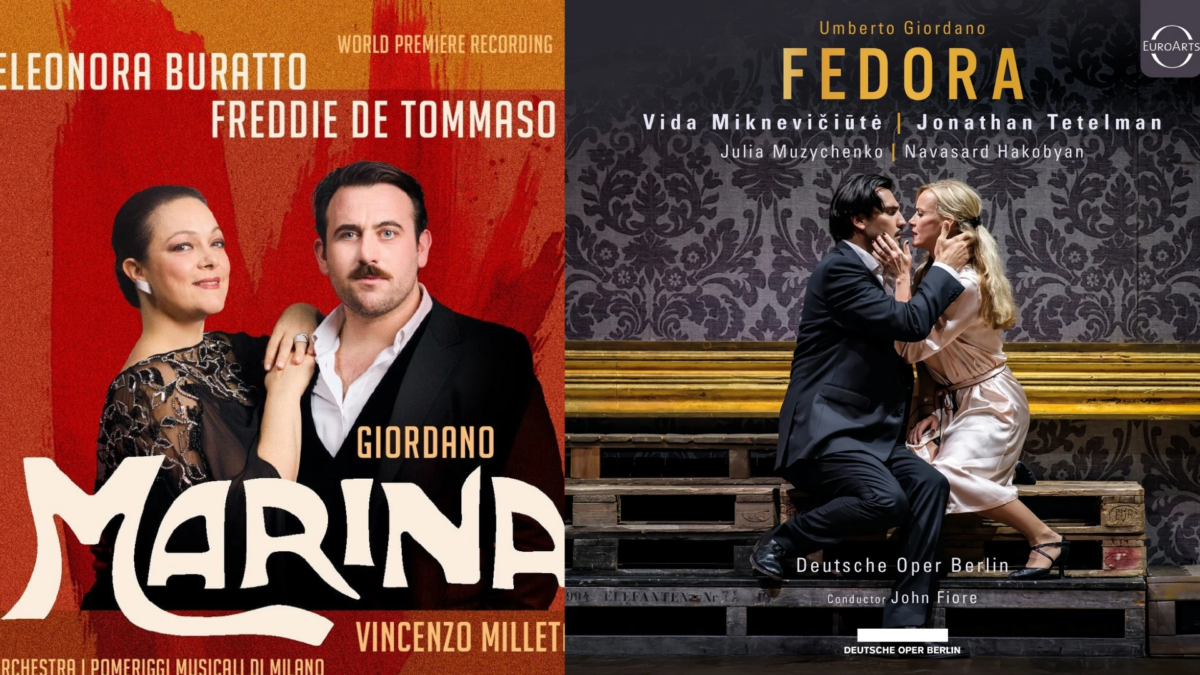
The latest recording of the opera Marina by Umberto Giordano captures the opera’s first-ever public efficiency. Giordano wrote this opera for the 1888 opera competitors sponsored by the writer Casa Sonzogno, the very contest that Cavalleria Rusticana gained. Marina acquired an honorable point out. Sonzogno noticed sufficient potential to fee a brand new opera. Giordano then wrote La Mala Vita, his first success. Because it reused supplies from Marina, Giordano by no means tried to have Marina carried out and the manuscript was thought misplaced.
Then, musicologist Andreas Gies discovered it within the Beinecke Library at Yale. His performing version debuted at a live performance efficiency in February 2026 on the Teatro dal Verme in Milan, which was recorded for this launch. The primary staged performances adopted on the Teatro Umberto Giordano in Foggia in June.
It takes place throughout a battle between Serbia and Montenegro, which can have been the creation of the librettist, Enrico Goliscani. Marina, a Montenegrin, presents shelter to a wounded Serbian soldier, Giorgio. In fact, Giorgio is the son of the person who killed Marina’s father. Marina’s brother, Daniele, and his pal Lambro return from simply having killed Giorgio’s father. Lambro asks for Marina’s hand in marriage, however then Giorgio is found. Giorgio is condemned to demise and Marina is denounced despite the fact that she was simply following the Montenegrin hospitality practices. After an orchestral interlude, Marina visits Giorgio in his makeshift jail. They sing a love duet earlier than she frees him and offers him a cloak so he can flee. Inside seconds, he’s shot by Lambro, who then finds Marina and kills her. Daniele laments whereas Lambro insists solely heaven can choose him.
As a primary work by a 21-year-old composer, it’s spectacular for its depth and idiomatic vocal writing. Nevertheless, the opera feels rushed and frantic, and the massive numbers usually are not notably memorable. In fact, there are glimmers of the Giordano to come back within the work, corresponding to within the pretty interlude. Whereas its discovery is notable, this launch appears like one thing of a honeypot designed to lure obsessive classical music collectors. I’d be extra excited in the event that they recorded La Mala Vita as a substitute or if this marked the beginning of an initiative to file verismo works that now languish in obscurity. (Madame Sans-Gêne, anybody?) As soon as upon a time, Decca had the outstanding Entartete Musik collection dedicated to music suppressed by the Third Reich. Alas, an identical initiative for verismo doesn’t appear doable from the much less bold Decca Classics of at this time.
The performers make the very best case for this work. As Marina, Eleonora Buratto provides us loads of passionate depth, chest voice, and large, if barely wild, excessive notes. Freddie De Tommaso is totally on his finest conduct, singing with tenderness, pathos, and a formidable ultimate diminuendo in his aria. Baritone Mihai Damian makes a robust impression because the murderous Lambro. He gained the Operalia competitors in 2025 and holds promise in dramatic baritone roles. Baritone Nicholas Mogg, as Daniele, usually sings lighter roles and appears harassed on the climax. Conductor Vincenzo Milletarì leads the Orchestra I Pomeriggi Musicali and the Coro del Teatro Petruzzelli di Bari. He delivers a compelling efficiency, however most likely ought to have allowed the work extra respiration room.
This recording of Marina was shortly adopted by a new recording of Giordano’s Fedora, derived from dwell performances on the Deutsche Oper Berlin on the finish of 2025. The later work has the colour and dramatic sweep that Marina lacks. This efficiency is helped enormously by the conducting of John Fiore, who conducts with actual verismo fashion. The work is rigorously formed with deeply emotional climaxes that don’t cross into schmalz.
The doomed lovers, Fedora and Loris, are portrayed by Vida Miknevičiūtė and Jonathan Tetelman. Miknevičiūtė will probably be making her Met debut within the new Fanciulla and I’m excited based mostly on her work right here. Whereas I used to be involved at first that her voice was too mild, her singing shortly took on a weightier, extra dramatic character. There are various considerate particulars in her interpretation together with appreciable emotional vary. Tetelman sings very effectively, however he often appears cautious and aloof compared to Miknevičiūtė. Nonetheless, it’s a worthy, thrilling rendition of the half.
Rounding out the forged are Julia Muzychenko and Navasard Hakobyan as Olga and De Siriex. Neither has a very glamorous voice, however they carry out their elements vividly with out resorting to the hamminess that may hurt these roles.
This efficiency can be accessible on video in a manufacturing by Christof Loy that may be discovered on medici.television or Stage+. The manufacturing doesn’t strike me as amongst Loy’s higher efforts, however I heartily advocate giving this efficiency a pay attention or a watch in case you’re curious.

Daybreak Fatale
Richard Lynn is a New York Metropolis based mostly opera lover who writes at parterre field beneath the title Daybreak Fatale. His love of opera began at a really younger age when he used to hearken to the Met broadcasts and obsessively learn again problems with Opera Information in lieu of socializing at household gatherings. In school, he majored in Chemistry whereas taking as many music and theater programs as doable. He labored at the Music Library to get entry to the opera recordings that have been off limits to undergraduates. For the reason that early Nineteen Nineties he has been writing about opera at parterre field and different publications and is especially the evolution of staging and efficiency practices.

